Caring for our honeybees
Beekeeping is less about managing bees and more about understanding them. For most of the year, our little colony simply gets on with the job it has evolved to do. The beekeeper’s role is to keep an eye on the hive, step in when needed and create the best possible conditions for the colony to thrive.
From spring through to late summer, our honeybees are at their busiest! What starts off as a little colony of less than 10,000 can reach up to 50,000 – 80,000 bees during this peak season. Every day, our bees leave the hive in search of nectar and pollen, travelling across the estate and pollinating the trees, wildflowers and plants that help make Wormsley such a rich and diverse landscape.
While the honey and beeswax they produce are wonderful by-products of beekeeping, their role as pollinators is every bit as important. A healthy colony can visit millions of flowers in a single day, supporting biodiversity across the estate and helping many of the plants we enjoy to flourish.
Despite the activity around the hive, honeybees are remarkably self-sufficient. During the spring and summer months, our beekeeper, Paul, usually inspects each hive just once a week, checking that the colony is healthy and has everything it needs to flourish.
Inside the hive
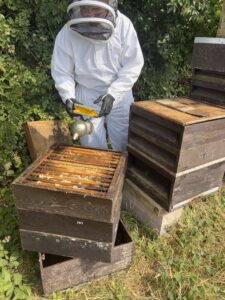
A routine hive inspection usually takes between 10 and 20 minutes. Before opening the hive, Paul puts on protective clothing and lights a smoker, which produces cool smoke to help keep the bees calm while they’re being inspected.
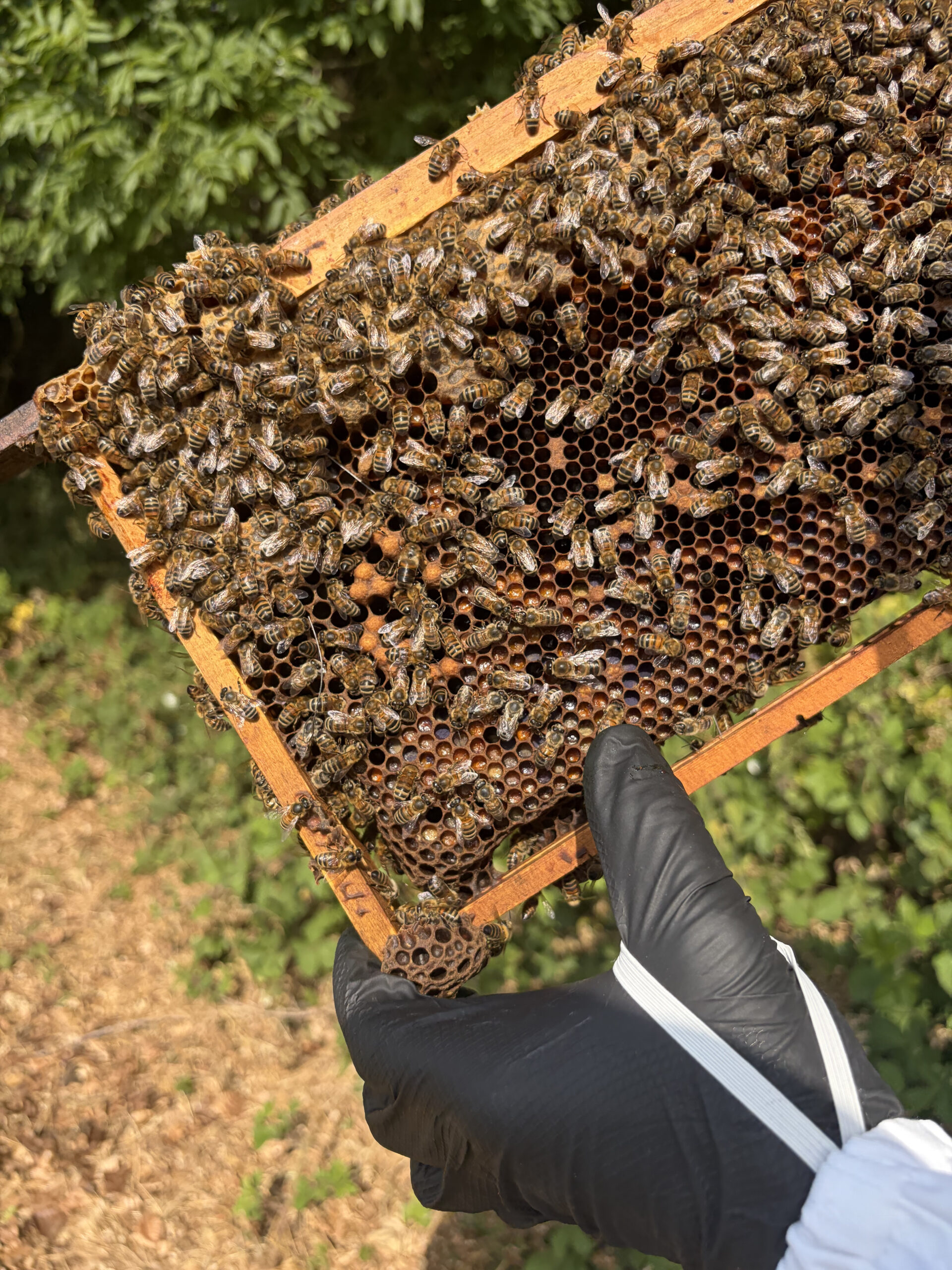
The hive is opened carefully, and each frame is removed one at a time. As well as looking for signs of a healthy colony, Paul checks food stores, looks for signs of disease or pests, and makes sure the bees have enough space as the colony grows. Once the inspection is complete, the hive is gently closed again, taking care not to trap any bees.
Rather than searching for the queen to check on her – she’s very important! – Paul usually looks for freshly laid eggs and young larvae. Their presence is a reassuring sign that she’s healthy and laying well.
Keeping the colony healthy
Like any living community, a bee colony can face challenges. One of the biggest threats is the Varroa mite, a tiny parasite that can weaken bees and spread disease throughout the hive.
Regular inspections help identify any problems early, giving our colony the best chance of remaining healthy throughout the season.
Paul also keeps an eye on the colony’s food stores, particularly after prolonged spells of poor weather when there may be fewer opportunities for the bees to forage. Making sure they have enough honey and pollen is an important part of helping them all stay strong.
Preventing swarms
Another reason for inspecting hives during spring and early summer is to look for queen cells. These larger, peanut-shaped wax cells suggest the colony may be preparing to raise a new queen.
This often means the existing queen is preparing to leave the hive with around half the worker bees to establish a new colony elsewhere. Swarming is a completely natural part of a honeybee’s lifecycle, but it reduces the size of the colony and can affect honey production.
If queen cells are found, Paul may decide to divide the colony into two smaller hives, helping to manage the swarm while keeping both colonies healthy.
Over the summer months, as the colony grows, additional hive boxes, known as supers, are also added above the brood box, giving the bees plenty of room to store honey and continue expanding throughout the season.
Turning nectar to honey
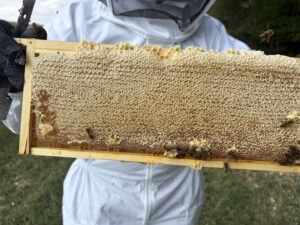
For the honeybees to turn the nectar to honey, the bees need to lower the water content to less than 18%. To do this the bees add enzymes to break down the sugars, pass the nectar by mouth to mouth and fan their wings rapidly. When the honey is ready bees cap the honeycomb with bees wax which they secrete from the wax gland on their abdomen which hardens when in contact with air.
Harvesting the honey
When the honey-filled frames are ready, they can be harvested. Bee welfare always comes first for us, so enough honey is left in every hive to ensure the colony has the food it needs before any surplus is collected.
For Paul, one of the most rewarding parts of beekeeping is about helping healthy colonies thrive and supporting the landscape around them.
By caring for the bees, we’re helping to protect the rich variety of wildflowers, trees and wildlife that make Wormsley so special. It’s a small but important part of looking after the estate, ensuring that both the bees and the landscape continue to flourish for years to come.